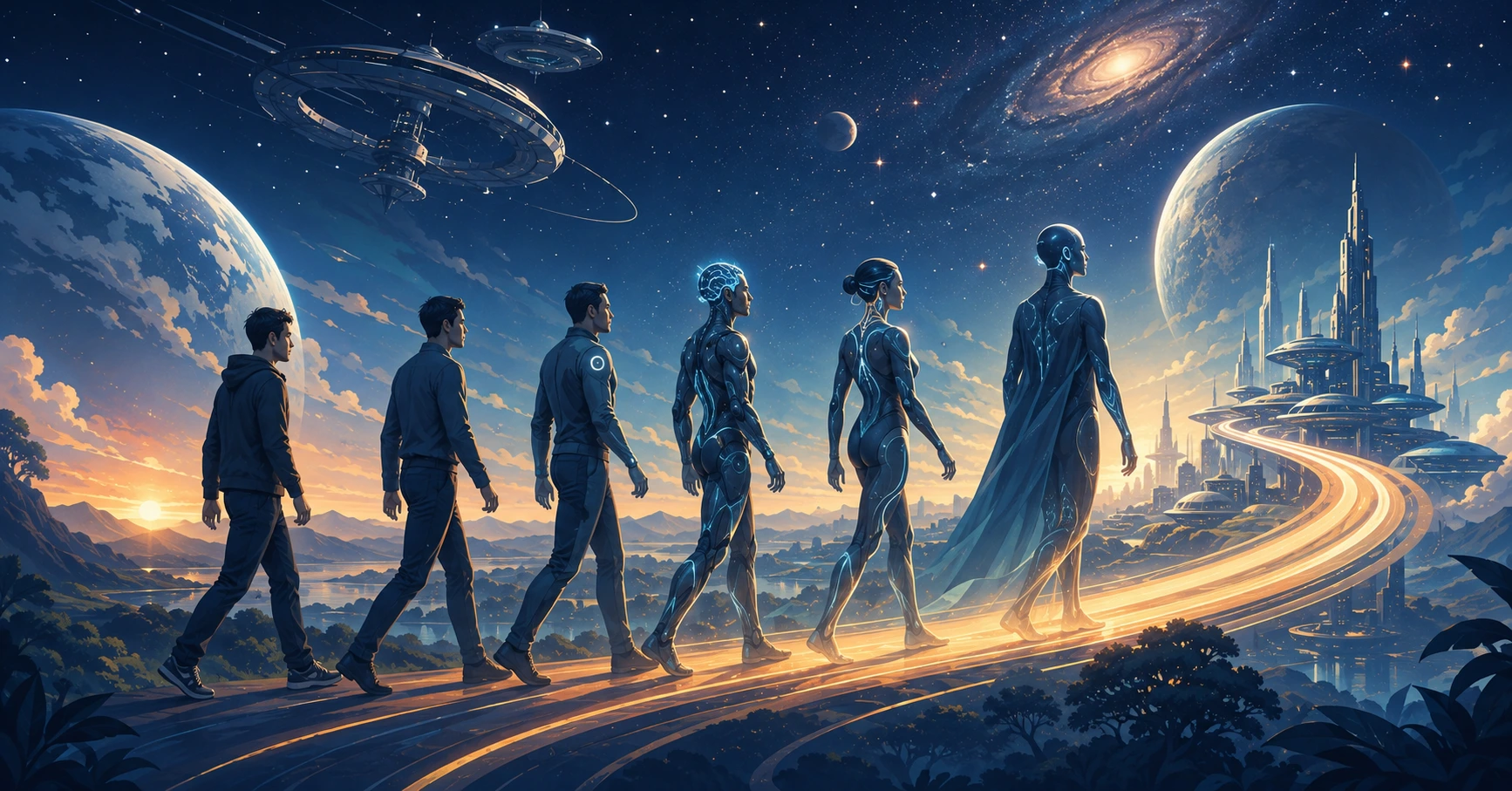
Science fiction explores what humanity might become after years of discovery, conflict, survival, and progress. Some stories picture humans living on other planets. Others show people using technology in ways we do not yet understand. Some imagine changes in our bodies, minds, and societies.
These stories attract readers because they do more than just predict the future. They also make us reflect on the present.
When a science fiction book imagines the future of humanity, it raises a simple but important question: What parts of us stay human when everything else changes?
Future Humanity Begins With Today
Science fiction does not create future humanity from nothing.
It often begins with problems we already face. Issues such as climate change, war, disease, artificial intelligence, space travel, and social division all influence how writers envision the future.
A story might take one of these ideas and imagine what happens next. If humans leave Earth, what kind of society would they build on Mars? If technology changes our bodies, do we still see ourselves the same way? If we meet advanced civilizations, do we learn from them, resist them, or lose something of ourselves?
These questions feel large, but they come from real concerns.
Readers like stories about future evolution because they link imagination with real possibilities. The future might seem far away, but the choices that shape it start today.
Technology Changes the Human Experience
Technology is a key part of science fiction about the future. It changes how people live, communicate, travel, and survive. In many stories, humans are no longer limited to one planet. They build colonies, travel through deep space, and use machines to extend life or improve the mind.
This kind of progress can feel exciting.
Better medicine can ease suffering. Cleaner energy can help protect the planet. Space travel can offer new homes for humanity. Advanced communication can bring people together across great distances.
But science fiction also asks what we might lose because of this progress.
If technology takes away struggle, does it also take away part of what helps us grow as humans?
If people rely on machines for every decision, do they lose their independence?
If humans change their bodies or minds too much, at what point do we stop being human?
Good science fiction does not offer simple answers. It encourages readers to think about the questions.
Human Evolution Is More Than the Body
When people hear the word evolution, they often think of physical change.
Science fiction expands that idea.
Future humans may not only look different. They may think differently. They may build new social systems. They may value peace, knowledge, or collective survival more than personal success. They may see identity in a way that feels strange to us today.
This creates some of the most interesting stories in the genre.
A future society may look peaceful from the outside. It may have clean cities, advanced science, and long life. But the deeper question remains. Do people still have freedom? Do they still feel love, fear, grief, hope, and ambition? Do they still make their own choices?
A perfect society can still hide serious problems.
That is why stories about future humanity work so well. They allow writers to explore progress without assuming that progress always means goodness.
Space Travel Expands Human Identity
Space travel changes how humanity sees itself.
On Earth, people often define themselves by country, culture, language, or history. Once humans spread across planets, those labels start to change.
A person born on Mars may not see Earth the same way as someone who lives there. A colony near Jupiter may develop its own values. A generation that grows up among the stars may think about home differently.
Science fiction uses this idea often.
It shows that human evolution can happen through distance. When people live in new environments, they adapt. They create new habits, new systems, and new ways to survive.
Over time, those changes shape identity.
This does not mean they stop being human. It means humanity extends beyond one planet, one culture, or one version of life.
Advanced Societies Reveal Human Strengths and Weaknesses
Many science fiction books introduce future societies that seem far ahead of ours.
They have better technology. They control disease. They travel through space. They solve problems that still trouble us.
At first, these societies might seem perfect.
Then the story looks closer.
Readers may find control beneath the peace. They may find loss beneath the comfort. They may find that a society removes conflict by limiting choice. They may find that progress creates new forms of pressure.
This kind of storytelling matters because it keeps future evolution human.
People do not become perfect just because technology improves. They still face moral choices. They still struggle with power, truth, identity, and survival.
Science fiction understands this well. It shows that the future can be both beautiful and unsettling.
Displacement Explores This Theme
J. Thomas Hunton’s Displacement connects strongly with this idea of future humanity.
The story follows Georgia and her crew as their space mission leads them into a future that feels both advanced and unfamiliar. They encounter societies shaped by time, technology, and contact with beings far beyond present-day human understanding.
The novel does not only focus on spaceships or scientific discovery. It also asks what humanity becomes when progress outpaces people’s ability to understand.
Through its future societies and advanced civilizations, Displacement explores a serious question. Can humanity grow into something greater without losing the qualities that make it human?
That question adds more depth to the story. It turns space exploration into a reflection on identity, change, and responsibility.
Why Readers Care About Humanity’s Future
Readers return to these stories because the future gives them distance. It lets them think about today without feeling stuck in the present.
A story about future humans can prompt readers to reflect on technology, ethics, family, leadership, survival, and the meaning of progress. It can show where current choices may lead. It can also show what humanity may gain or lose along the way.
Science fiction does not need to predict the future perfectly. That is not its main job.
Its real strength lies in asking better questions. What kind of future do we want? What should we protect as we move forward? What makes us human when our world changes?
These questions keep future evolution stories powerful. They remind readers that progress is not only about reaching the stars. It is also about deciding who we become when we get there.